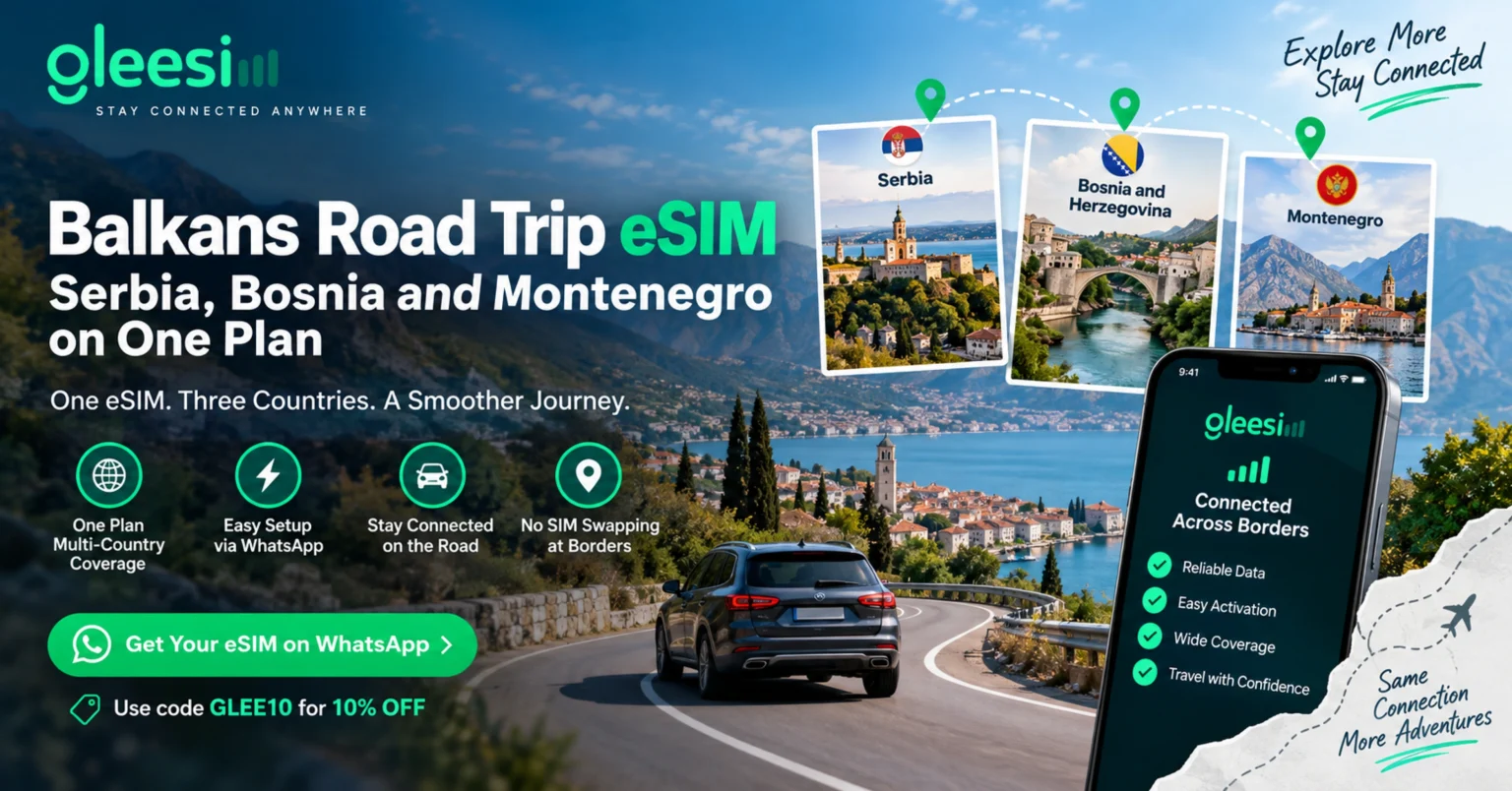
Are you planning to drive through Serbia, Bosnia and Herzegovina, and Montenegro, and wondering how many SIM cards that trip is going to cost you? A Balkans road trip eSIM solves this problem before you even pack the car. This article will help you understand, in plain and easy words, exactly how one eSIM can cover the whole route. After reading it all the way through, you will know exactly what to set up before you leave Belgrade behind and start crossing borders.
Serbia sits in an unusual spot for this kind of trip. It is not part of the European Union, so it falls outside the normal EU roaming rules, and neither are Bosnia and Herzegovina or Montenegro. A road trip that loops through all three countries means crossing borders where a phone plan built for the EU simply stops working the way you expect it to. Buying a brand new local SIM card at every single border also eats up travel time that you would much rather spend actually on the road.
An eSIM is like a SIM card, but it is invisible. It lives inside your phone already, so there is no little plastic card to push in or pull out. You turn it on with a picture called a QR code, which your phone scans in just a couple of seconds.
What is an eSIM, in simple words? An eSIM (short for “embedded SIM”) is a digital SIM card built right into most phones from the last several years. You install it by scanning a QR code, and it connects your phone to the internet in a new country. Your home phone number and your regular SIM stay exactly the same the whole time, so nothing about your normal number changes.
If your phone is an iPhone 11 or newer, or a Samsung Galaxy S20 or newer, it already supports this feature, with no extra hardware needed.
Travelers used to the EU’s roaming rules, where a home SIM just keeps working across member countries without any trouble, often get caught off guard the moment they cross into a non-EU Balkan country.
What is a regional multi-country eSIM, in simple words? A regional multi-country eSIM is one single data plan that already includes coverage across several different countries. That means the same eSIM keeps working as you physically drive across borders, without needing a new QR code or a new SIM at every stop. For a Balkans loop, one setup before you leave home covers the entire route.
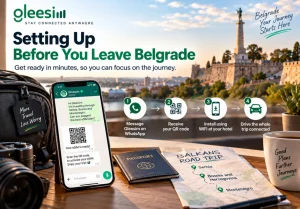
Road trips are much easier to plan for connectivity before you hit the first border, since standing at a remote crossing point trying to fix a SIM card is not a fun way to spend your morning.
Different trips need different amounts of data, so here is a simple way to figure out what you need before you go.
| Route | Typical use | Suggested data | Notes |
| Serbia only (Belgrade, Novi Sad, Nis) | Maps, messaging, hotel bookings | 5 to 10GB | Serbia-only plan from $11.01 |
| Serbia into Bosnia and Montenegro | Full road trip navigation, messaging, photo sharing | 5 to 20GB | Wider regional plan tier |
| Extended loop including further Balkan stops | Multi-week travel, heavier daily data use | 10 to 20GB | Higher-tier, longer validity |
All of these plans are data-only, which just means they give you internet, but not a new phone number. Your home number keeps working normally for calls and texts through your main SIM the whole trip. WhatsApp works normally in all three countries, which is handy for staying in touch between travel companions, especially useful for when a group splits up to explore Kotor Bay or Mostar’s Old Town separately before meeting back up.
The drive between Serbia and Montenegro in particular runs through mountainous stretches where signal can dip a little between towns. If a longer stretch than expected eats into your data faster than planned, a quick WhatsApp message asking for a top-up adds more data to the same active plan within minutes, with no need to find WiFi first.
For the Serbia part of the trip specifically, including options for people visiting family and detailed carrier coverage across Belgrade, Novi Sad, and Nis, the full Gleesim Serbia eSIM page has pricing tiers and network detail worth checking before you set off.
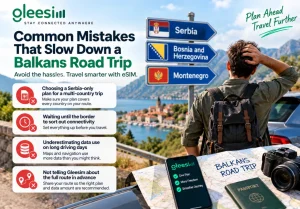
A road trip through several countries has a few extra things to watch out for, so here are the most common ones to avoid.
Yes, as long as you pick a regional plan tier that includes coverage for Serbia, Bosnia and Herzegovina, and Montenegro. The profile automatically switches networks as you cross each border, with nothing for you to change by hand.
It helps to share your rough route and how long your trip will be over WhatsApp, so the right plan tier and amount of data get recommended, but the plan itself works across any of the covered countries no matter what order you visit them in.
A top-up or an extended plan can be added to your existing eSIM through a simple WhatsApp message, so a few extra days on the road do not mean starting the whole setup over again.
Coverage follows each country’s main network, which is strong along the major roads and towns, with a little natural variation in more remote mountain stretches, similar to what you would get from any local SIM card.
No, as long as you choose a regional plan with wider European or Balkans coverage instead of the Serbia-only option. Just mention your full route over WhatsApp so the plan chosen actually covers every country on your itinerary.
A Balkans road trip through Serbia, Bosnia and Herzegovina, and Montenegro should be all about the drive itself, not a string of SIM card stops at every single border crossing. Setting up one eSIM before you leave Belgrade keeps the whole route on a single connection from start to finish.
Planning the drive? Message GLEE10 on WhatsApp for 10% off your regional Balkans eSIM plan, check live pricing on the Gleesim offers page, and get on the road already connected.