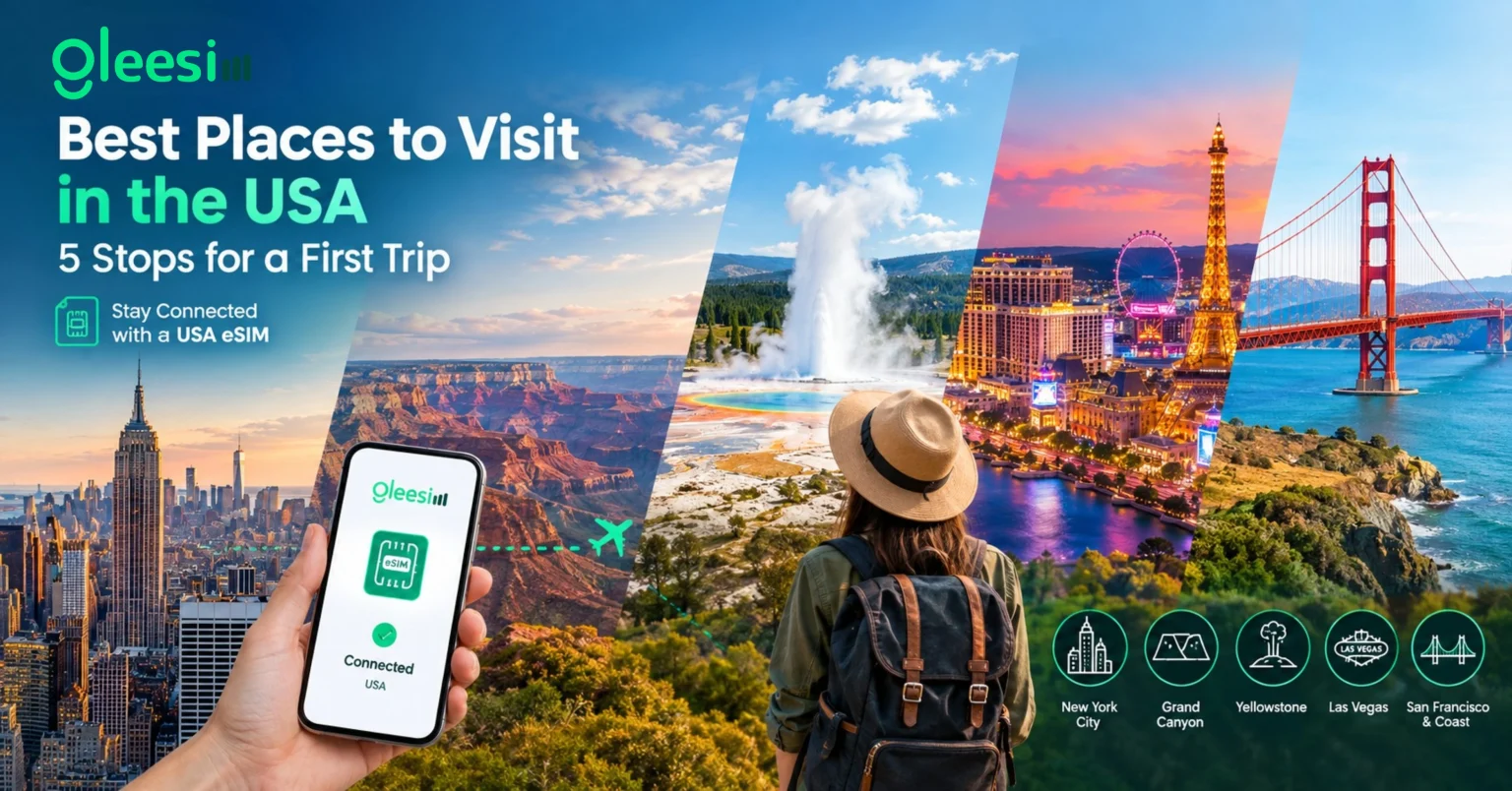
The United States is close to the size of a continent, which means a single trip has to pick a region rather than trying to see it all. The best places to visit in the USA range from a coastline of skyscrapers to a canyon a mile deep to a national park where wildlife has the right of way, and most of them are a flight apart rather than a drive. This guide covers five stops that work well for a first trip, plus what to set up before landing so a US carrier’s roaming fees do not turn into a surprise on your first phone bill home.
New York is where a lot of first US trips begin, and it holds up to the reputation. Central Park, Times Square, and the view from the Empire State Building or the newer Edge observation deck cover the postcard version of the city in a day or two. The real character shows up in the neighborhoods though, Brooklyn’s waterfront, the food in Queens, the walk across the Brooklyn Bridge at sunset. Three or four days is enough to get a real feel for it without trying to see everything.
The Grand Canyon does not really translate to a photo, which is part of why so many people say the same thing when they see it in person for the first time. The South Rim is the accessible option, with viewpoints reachable by a short walk or a free shuttle bus. Sunrise and sunset bring out the layered colors in the rock best, and if time allows, a short hike below the rim, even just partway down the Bright Angel Trail, gives a sense of scale that the rim viewpoints alone do not.
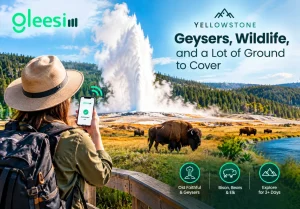
Yellowstone is the oldest national park in the country, and it covers enough ground that most visitors need at least three days to see the main areas without rushing. Old Faithful is the famous geyser, but the wider Upper Geyser Basin has dozens of others worth the walk. Wildlife here includes bison that walk directly down the road, bears, and elk, and a good pair of binoculars matters more than a fancy camera for actually seeing them well.
Las Vegas gets treated as a punchline sometimes, but it is also the closest major airport to the Grand Canyon and a genuinely useful base for a Southwest road trip. The Strip itself, with its casinos and shows, is worth a night or two even for visitors who do not gamble, just for the scale of it. Red Rock Canyon, a short drive from the Strip, is a quieter counterpoint if the city itself starts to feel like too much.
San Francisco, with the Golden Gate Bridge, cable cars, and the food scene, works well as a base for exploring the coast in either direction. Driving south on Highway 1 toward Big Sur covers some of the most photographed coastline in the country, with cliffside turnouts worth stopping at even if you are not going all the way to Los Angeles. A rental car is close to essential for this stretch, since public transport does not cover the coastal route.
International roaming rates in the US catch a lot of visitors off guard, since major carriers here charge some of the highest per-day roaming fees compared to other regions. Buying a local SIM at the airport is an option, but it means dealing with an unfamiliar carrier store after a long flight, and coverage quality varies a lot between the major networks depending on which region you are visiting. A USA eSIM set up before you fly avoids both problems.
GleeSim handles the whole setup through WhatsApp. Message the number with your route, whether that is just New York or a longer loop through the Southwest national parks, and a plan gets suggested along with a QR code. Install it on WiFi before departure, and it turns on automatically once your phone picks up a US network. National parks like Yellowstone and the Grand Canyon have patchy coverage in more remote sections regardless of carrier, which is normal for those areas.
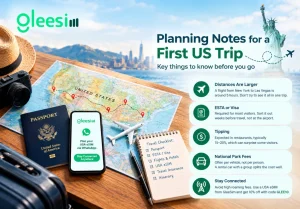
Distances are larger than they look on a map, and a flight from New York to Las Vegas is around five hours, so trying to combine East Coast cities with Southwest national parks in one short trip usually means too much time in airports. An ESTA or visa is required in advance for most visitors and should be sorted weeks before travel, not at the airport. Tipping is expected in restaurants, typically fifteen to twenty percent, which surprises visitors from countries where it is not standard practice. National park entry fees are often per vehicle rather than per person, so a rental car with a group splits the cost well.
Does one USA eSIM plan cover both cities and national parks? Yes, a national USA eSIM plan covers the country broadly, though signal in remote sections of parks like Yellowstone depends on local carrier coverage rather than the eSIM itself.
How much data do I need for a two-week US trip? Most travelers using maps, messaging, and photo uploads across a mix of cities and parks are comfortable on 10 to 15GB. Heavier navigation use on long road trip days pushes that number up.
Is a USA eSIM cheaper than my home carrier’s international roaming plan? Usually, yes, and by a wide margin, since major home carriers often charge daily roaming fees that add up fast over a two or three week trip.
Can I top up my data if I extend my national park stay? Yes, a WhatsApp message adds more data to the same active eSIM, so an extra few days in Yellowstone does not mean starting the setup over from scratch.
New York, the Grand Canyon, Yellowstone, Las Vegas, and the California coast cover a wide stretch of the country, and the eSIM setup should be one less thing to think about along the way. Message GLEE10 on WhatsApp before you fly for 10% off a USA eSIM plan, check current pricing on the Gleesim offers page, or see full plan tiers on the Gleesim USA eSIM page. For a broader look at how eSIM setup works anywhere you travel, the Gleesim travel eSIM guides hub has more detail.