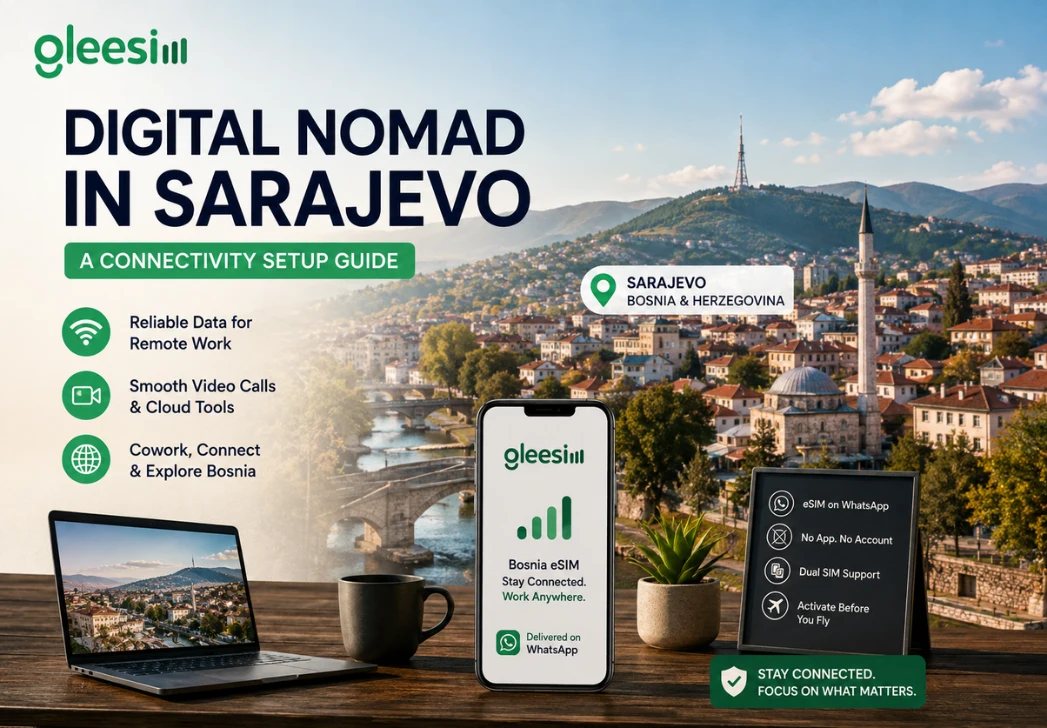
Are you weighing up Sarajevo as your next base for remote work? It’s cheaper than most Western European capitals, small enough to navigate without a car, and increasingly popular with remote workers looking for somewhere unfamiliar without the cost of Lisbon or Berlin.
This article will help you understand what connectivity actually looks like for someone working from Sarajevo day to day. After developing a complete understanding, you can make a better decision on how to set yourself up before you arrive.
Sarajevo combines a low cost of living with a genuinely interesting city, old town cafes, a walkable centre, and a growing number of coworking spaces aimed squarely at remote workers. It’s not yet as saturated as Lisbon or Tbilisi, which means better rates on short-term apartments and less competition for the good coworking desks.
Stable video calls. Client calls and team meetings need consistent upload speed, not just fast download, which is where budget mobile plans sometimes fall short.
A backup for coworking Wi-Fi. Shared workspace Wi-Fi is generally solid in Sarajevo, but having your own mobile data as backup means one bad Wi-Fi day doesn’t cost you a client deadline.
Enough data for cloud tools. Constant syncing with cloud storage and project management tools adds up over a month in a way a single holiday trip never does.
Dual SIM, in this context, means your phone runs your home number and your Bosnia eSIM side by side. Calls and texts stay on your usual number, while your Bosnia data plan handles everything else, so clients calling your regular number never notice you’ve moved country.
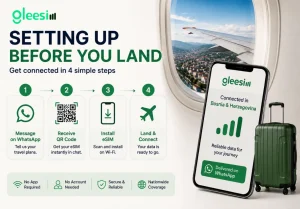
Buy your eSIM on WhatsApp before you fly, install it while still on home Wi-Fi, and activate it the moment you land. There’s no app to manage and no account login to remember when you’re mid-project and just need things to work.
The city has a small but real coworking scene concentrated around the centre, alongside a strong cafe culture where working from a laptop for a few hours is entirely normal. Between the two, most remote workers find enough Wi-Fi backed spaces without needing to rely on mobile data as a primary connection, which makes a dependable eSIM more of an insurance policy than a daily necessity.
Is mobile coverage reliable enough for daily video calls in Sarajevo? Yes, within the city centre coverage is consistent enough for regular client calls, though a stable Wi-Fi connection is still the better primary option when available.
How much data does a month of remote work typically use? It varies widely by role, but treating mobile data as backup rather than your main connection means a moderate plan is usually enough.
Do I need a Bosnian bank account or local SIM for a longer stay? Not for connectivity. An eSIM works regardless of how long you stay, though longer stays involving local admin like a rental agreement may benefit from a local SIM eventually.
Can I extend my eSIM plan if I decide to stay longer than planned? Yes, top ups and plan extensions are available without needing a new SIM or reinstalling anything.
See GleeSim’s Bosnia and Herzegovina eSIM page for current bundle pricing. When you are ready, get your bundle on offers.gleesim.com and land already connected.