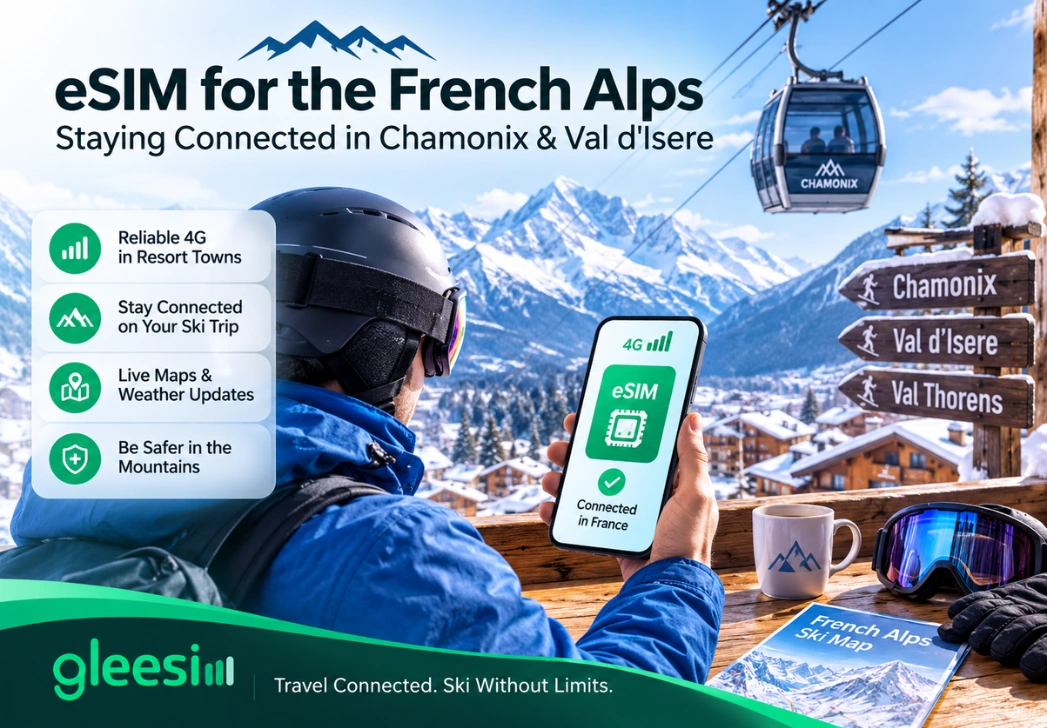
Are you heading to Chamonix or Val d’Isere this winter and worried about losing signal halfway up the mountain? Mountain resorts are notorious for patchy roaming coverage, and nobody wants to be stuck without maps, weather updates, or a way to reach their group on a ski trip. This article will help you to understand how a French Alps eSIM works in high-altitude terrain, what the ski season actually looks like month by month, and how connectivity ties into basic mountain safety. After developing a complete understanding, you can make a better decision on how to prepare before you ever leave home.
This is written for skiers and snowboarders heading to Chamonix, Val d’Isere, Val Thorens, or any of the major French Alps resorts, whether you are traveling solo, as a couple, or coordinating a larger group trip where staying in touch on the mountain actually matters.
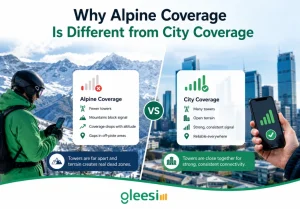
French telecom towers thin out fast above 1,500 meters. Val d’Isere and Chamonix both sit in valleys surrounded by peaks that block signal on certain slopes, and the terrain itself works against consistent connectivity in a way flat coastal regions simply do not experience. A local SIM bought at the airport often locks you into a single carrier’s tower map, which may not include your specific resort or the exact runs you plan to ski.
eSIM roaming: a digital SIM profile that lets your phone connect to a partner network abroad without swapping a physical card, activated through a QR code or direct install link, and layered on top of your existing home number rather than replacing it.
The French Alps ski season generally runs from early December through mid-April, with late December through February drawing the heaviest crowds and, as a result, the heaviest network load in resort centers. Shoulder season visitors in early December or late March often notice slightly faster data speeds simply because fewer devices are competing for the same towers.
Ski resorts in France post emergency contact numbers at lift stations and piste entrances, and having working data increases the odds you can reach mountain rescue or your group quickly if plans change. This is not a replacement for standard alpine safety practice such as skiing within your ability and checking avalanche bulletins, but it removes one point of friction when something does go wrong.
France uses the euro, and most resort transactions from lift passes to restaurant bills run through card payment, though having data to check exchange rates or split costs with a group via a payment app is a small but real convenience.
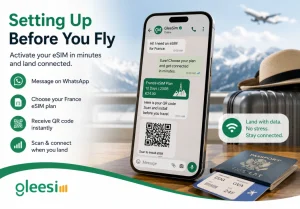
A GleeSim France eSIM activates over WhatsApp before you fly, so you land with data already working rather than hunting for wifi at the chalet. You message the number, pick a plan sized to your trip length, and the QR code arrives in the same chat thread, ready to scan the moment you land at Geneva or Lyon airport for the transfer up to resort.
| Zone | Typical Coverage | Notes |
| Resort village center | Strong 4G | Reliable for bookings and messaging |
| Mid-mountain lift stations | Moderate | Fine for texts, weaker for streaming |
| Off-piste and glacier routes | Weak to none | Download maps in advance |
| Mountain restaurants | Strong | Fixed infrastructure |
Do I need a French SIM if I already have EU roaming? Not always, but many UK and non-EU travelers pay steep daily roaming charges that a dedicated France eSIM plan avoids entirely, and even EU travelers sometimes find their home provider throttles speeds after a data threshold.
Can I keep my home WhatsApp number active? Yes. The eSIM adds data only, so your existing number and chats stay exactly as they are, and you can still message home using your normal WhatsApp account.
Is data fast enough for navigation apps on the drive up from Geneva airport? Yes, the main road routes into the Alps have solid coverage the entire way, including mountain passes leading into most major resorts.
Will my eSIM work for the whole ski season if I book a long stay? Yes, GleeSim plans can be sized to your full trip length or topped up mid-stay through the same WhatsApp thread.
Should I buy data for the whole group or one plan per person? Most groups find individual eSIMs per phone work best for messaging and navigation, since everyone needs their own connection rather than sharing one device’s hotspot on the mountain.
Ready to ski without checking your signal bars every ten minutes? Explore the full GleeSim eSIM for France plans, or jump straight to offers.gleesim.com to buy your bundle in under two minutes. Get a free quote now on WhatsApp.