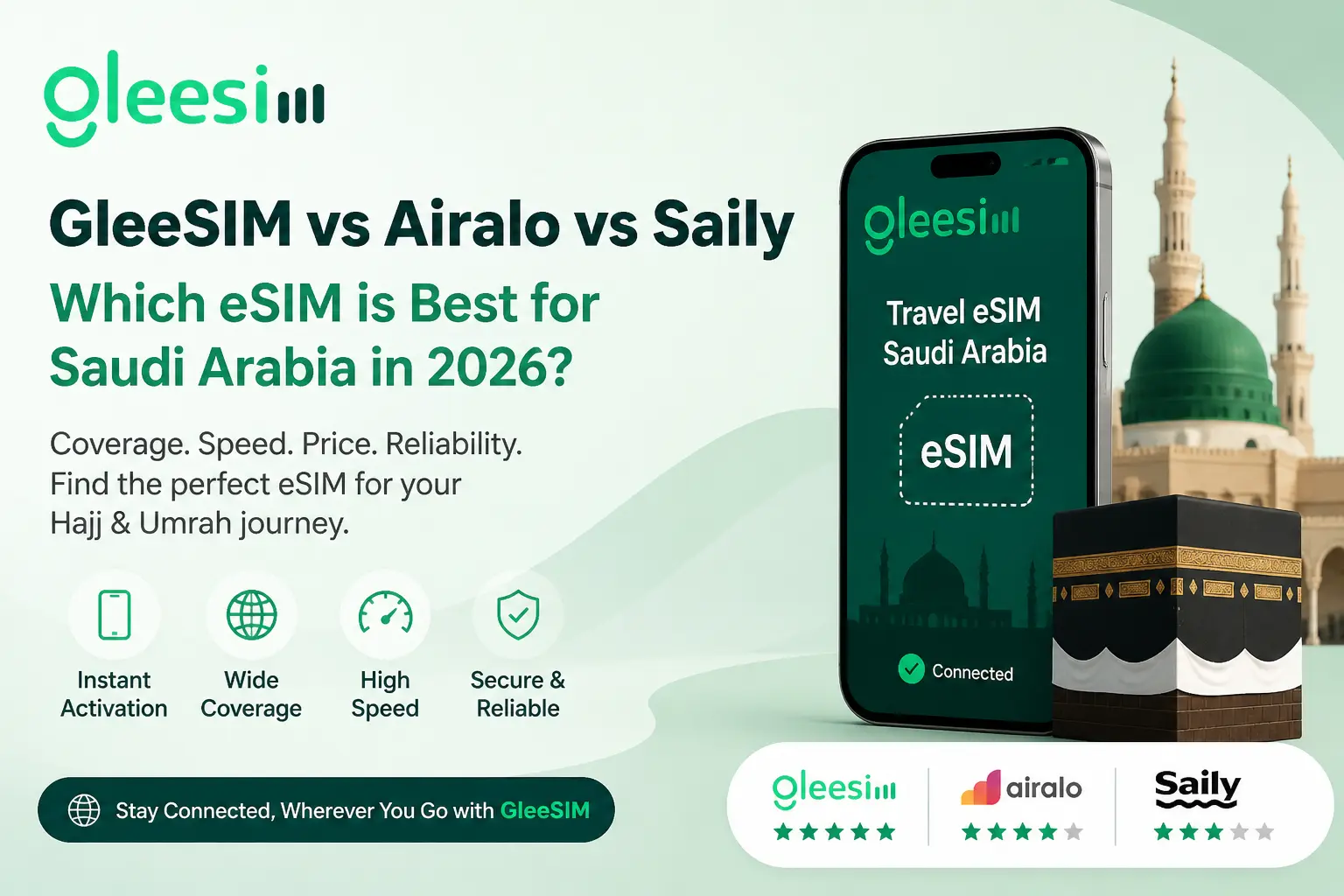
Travelling to Saudi Arabia in 2026, especially for Hajj or Umrah, takes more than spiritual preparation. Reliable mobile internet matters for navigation, communication with your group, and basic safety. With millions of pilgrims converging on Makkah, Madinah, Mina, and Arafat, network congestion is a real factor, not a minor inconvenience. This guide compares GleeSIM, Airalo, Saily, Holafly, and Nomad on coverage, pricing, activation, and how each one actually holds up in the busiest pilgrimage zones.
See the Saudi Arabia eSIM plans available now before you compare the rest.
Saudi Arabia has solid telecom infrastructure, with wide 4G coverage and growing 5G. During Hajj, though, three things change fast:
This is the exact gap eSIM technology is built to close, and it’s where the differences between providers start to matter.
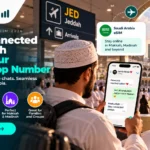
With GleeSim, you activate your data before you leave home, skip the physical SIM entirely, and stay connected across Makkah, Madinah, and the outer pilgrimage sites without extra setup on arrival.
|
Feature |
GleeSIM |
Airalo |
Saily |
Holafly |
Nomad |
|---|---|---|---|---|---|
|
Coverage in Saudi Arabia |
Strong, pilgrim-route focused |
Strong |
Good |
Wide |
Strong |
|
Free trial |
Yes |
No |
No |
No |
No |
|
Activation |
WhatsApp and QR, no app needed |
App required |
App required |
QR |
QR |
|
Data plans |
Flexible, built around pilgrimage length |
Fixed GB |
Fixed GB |
Unlimited |
Fixed GB |
|
Ease of use for first timers |
Very simple |
Easy |
Easy |
Easy |
Moderate |
|
Best suited for |
Hajj and Umrah travel |
General global travel |
Budget travel |
Heavy data users |
Speed focused travellers |
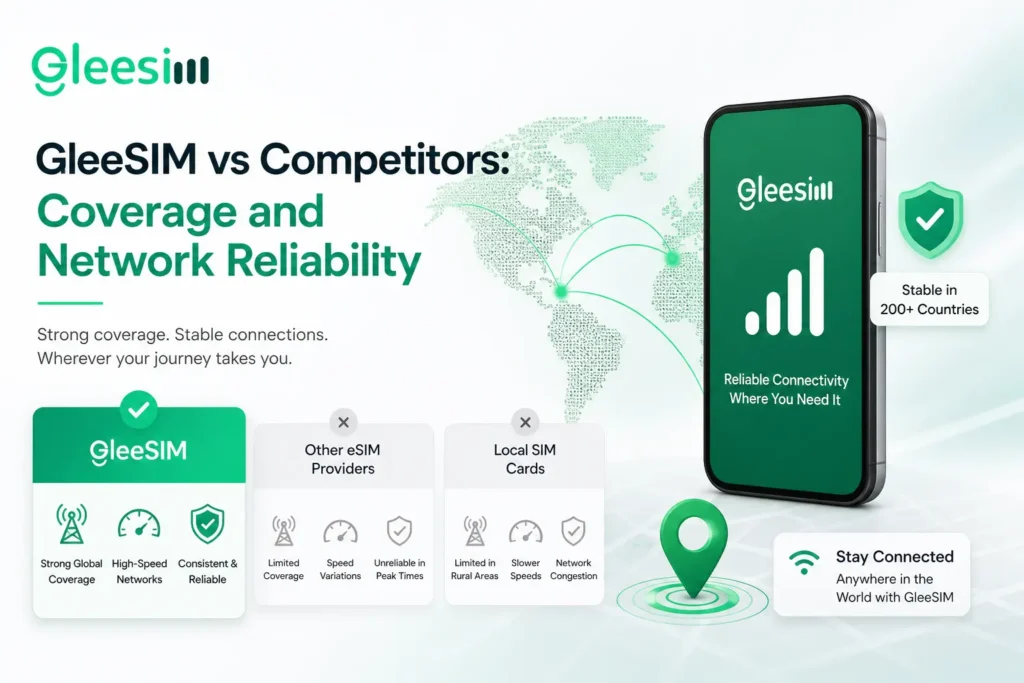
Coverage isn’t one number. It changes depending on where you actually are during your trip.
GleeSim is built with these specific conditions in mind rather than general city travel, which is the main practical difference between it and providers designed primarily for typical tourist trips.
For a first time pilgrim, being able to check that your data actually works before you rely on it for the whole trip is worth more than a small saving per gigabyte.
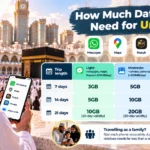
For a rough sense of how much data you’ll actually need:
Setup complexity matters more than most guides admit, particularly for elderly pilgrims or families travelling with several generations.
That difference sounds small until you’re trying to walk a first time traveler through eSIM setup at an airport gate with patchy Wi-Fi.
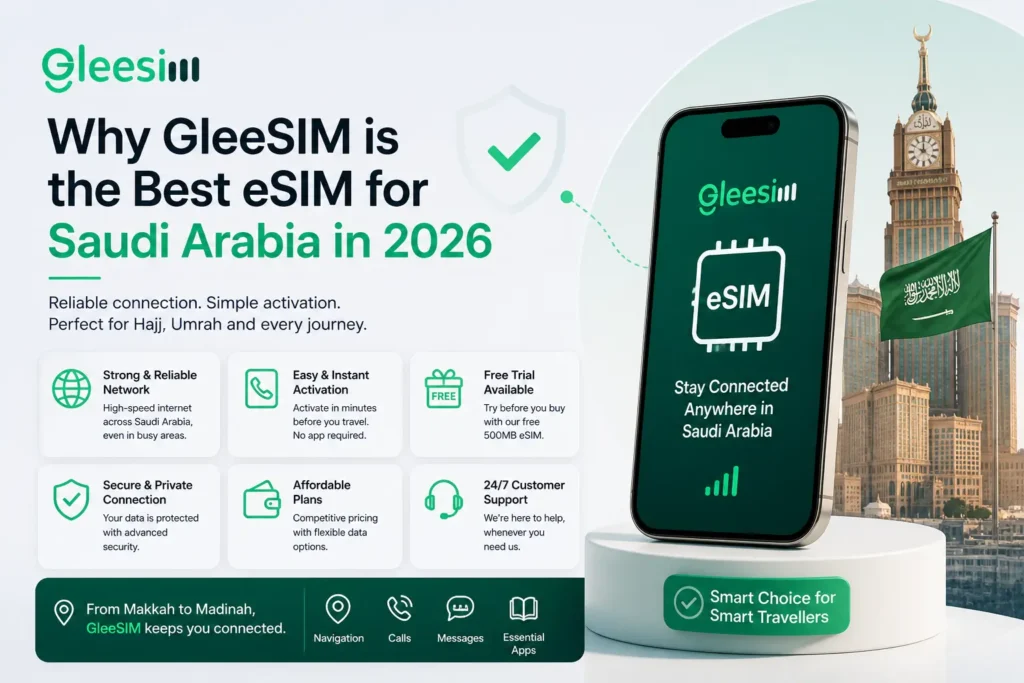
What makes GleeSIM different from other eSIM providers?
A free trial, WhatsApp based activation with no app required, and a setup built specifically around pilgrimage travel rather than general tourism.
Is GleeSIM suitable for Hajj pilgrims?
Yes. It’s designed around the specific congestion patterns of Makkah, Mina, and Arafat rather than general city travel.
Can I activate GleeSIM before arriving in Saudi Arabia?
Yes. Activate before you fly and your connection is ready the moment you land.
Does GleeSIM work in Makkah and Madinah?
Yes, across both cities and the outer pilgrimage sites including Mina and Arafat.
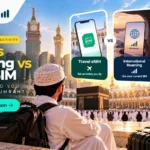
Is an eSIM better than roaming from my home carrier?
In most cases yes. It’s typically more predictable on price and doesn’t depend on your home carrier’s international agreements.
How much data do I actually need for Hajj?
Light use: 3 to 5GB. Moderate use: 8 to 10GB. Heavy use: 15GB or more, depending on how much you stream or video call.
Can I use WhatsApp and video calls on any of these providers?
Yes, all five support standard apps like WhatsApp, FaceTime, and Skype.
Is eSIM safe to use in Saudi Arabia?
Yes. eSIM services run through licensed local mobile networks, the same networks a local SIM card would use.
For pilgrims travelling to Saudi Arabia in 2026, the right eSIM choice comes down to where you’ll actually be, not just the headline coverage map. Mina and Arafat are the real test, not Makkah or Madinah on their own.
See the full range of Saudi Arabia eSIM plans here to compare what fits your trip length.