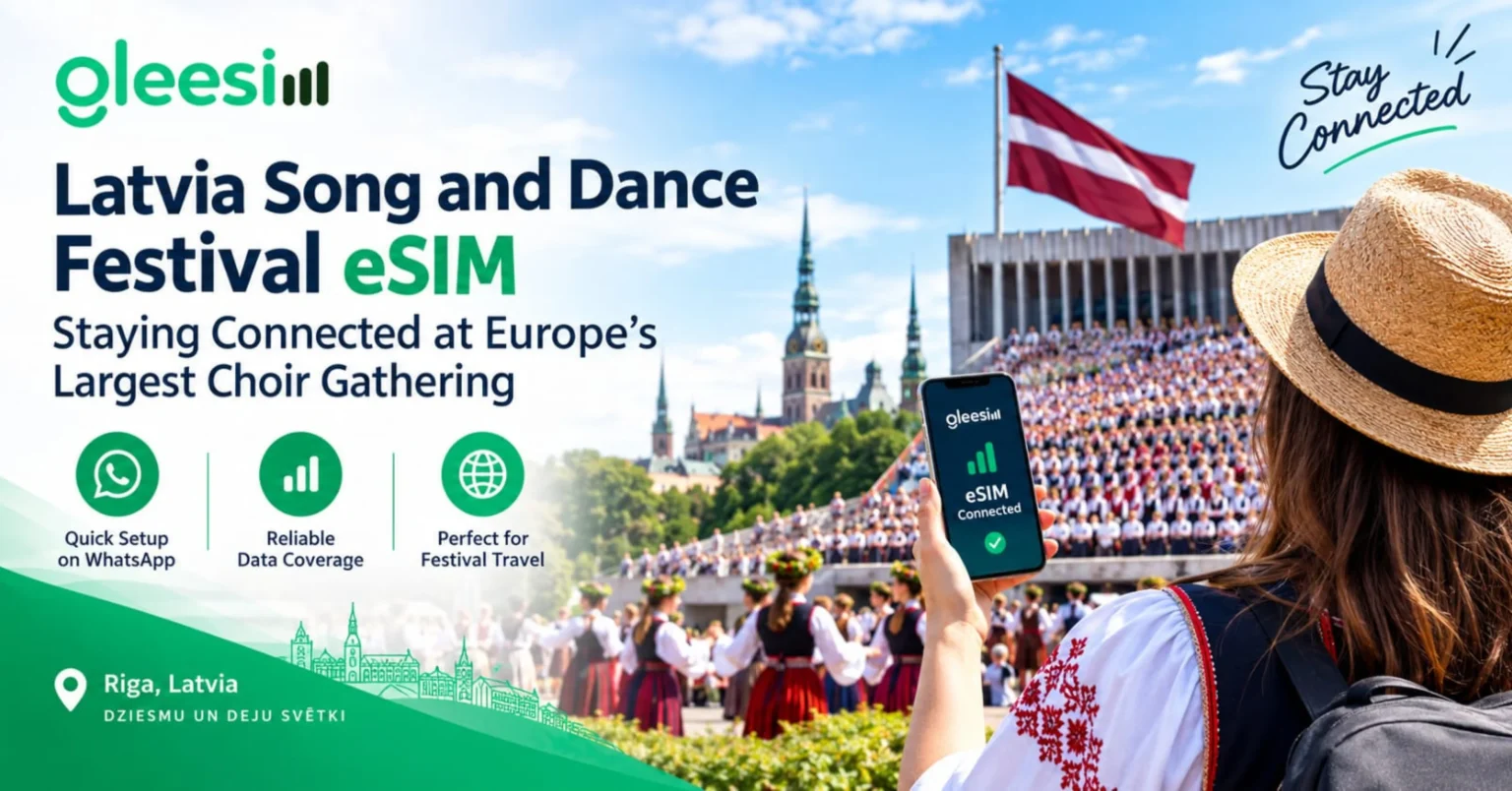
Are you flying into Riga for the Latvia Song and Dance Festival and wondering if your phone will even work in such a busy crowd? A Latvia Song and Dance Festival eSIM is a simple, small fix that solves this before you even leave home. This article will help you understand, in plain and easy words, exactly how it works. After reading it, you will know exactly how to stay connected through every parade, every open-air concert, and every packed street in the city center.
Held once every five years, the Latvian Song and Dance Festival is one of the biggest choir and folk dance events in all of Europe. It brings in performers from all over the world, including many people whose families moved away from Latvia long ago but still come back for this special event. That group is sometimes called the “diaspora,” which is just a fancy word for people who live far from their home country but still feel connected to it. Riga’s phone networks get very busy during festival week, especially around Mezaparks Great Stage and Esplanade Park, where huge crowds and heavy phone use from live streaming can slow things down for everyone.
An eSIM is like a SIM card, but you cannot see it or touch it. It is built right into your phone. Instead of putting in a small plastic card, you scan a picture called a QR code, and your phone connects to the local network by itself.
What is an eSIM, in simple words? An eSIM (short for “embedded SIM”) is a digital SIM card already built into most modern phones. You install it by scanning a QR code sent to you, and your phone gets a new data connection without opening any little SIM card tray. Your regular phone number and your regular SIM stay exactly as they were.
Most phones made in the last few years support this, including iPhone 11 and newer, and Samsung Galaxy S20 and newer. Setting one up takes only a few minutes and can be done from home, long before your flight to Riga even takes off.
A sudden wave of visitors packed into just a few streets puts real pressure on phone towers, even in a country with good coverage like Latvia. Local people notice the slowdown too, but travelers using their home country’s roaming plan usually feel it worse.
What is multi-IMSI switching, in simple words? Multi-IMSI switching is a clever bit of technology that lets your eSIM automatically pick whichever local network has the strongest signal nearby, switching between LMT, Tele2, or Bite without you doing anything at all. During a festival where huge crowds gather in some spots more than others, this keeps your connection steady even when thousands of phones are trying to use the same signal towers at once.
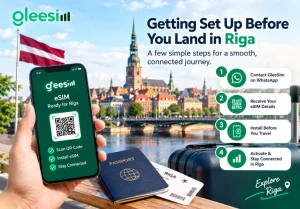
Most festival travelers book their hotel and transport months ahead of time. Your phone connection deserves that same head start. Setting it up a few days before you leave means one less thing to worry about once the singing and dancing begin.
Different trips need different amounts of data. Here is a simple guide to help you choose without any guesswork.
| Trip type | Typical use | Suggested data | Notes |
| Festival days only (Riga-based) | Live streaming, group messaging, maps between venues | 5 to 10GB | Latvia-only plan |
| Festival plus Baltic extension | Same, plus travel into Lithuania or Estonia after the festival | 5 to 20GB | 30-country EU plan covers the wider region |
| Diaspora visitor reconnecting with family | Video calls, photo sharing, extended stay | 10GB+ over 30 days | Longer validity window |
Every plan is data-only, which simply means it gives your phone internet, but not a new phone number. Your home number keeps working for calls and texts through your main SIM the whole time. WhatsApp works normally across the entire festival, which is a big help for staying in touch with performance groups, tour organizers, or family members you might be meeting again for the first time in years.
Many festival visitors turn their trip into a longer Baltic adventure, since Vilnius and Tallinn are both just a short drive or train ride from Riga. If that sounds like your plan, the Gleesim Latvia eSIM page has wider regional plans that cover more than just Latvia, so the same eSIM keeps working as you cross into new countries. There is no need to set anything up again at each border.
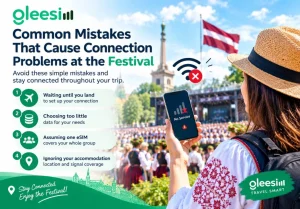
A few small planning mistakes can turn an unforgettable trip into a frustrating one. Here is what to watch out for.
Yes. The plan runs on Latvia’s main phone networks with full coverage across Riga, including Mezaparks and the historic center. Big crowds can slow down any network for a short time during the busiest moments, but a local eSIM still works far better than using your home country’s roaming plan.
Yes. Just send a WhatsApp message asking for a top-up, and extra data gets added to your existing plan within minutes, so you never have to stop filming to sort out your phone.
You technically could install it after landing, using the airport WiFi, but doing it before you leave means you land already connected, with nothing left to set up during the busiest arrival rush of the whole week.
Coverage is strong across Riga itself, as well as Jurmala and Sigulda. Signal does get weaker in more forested, countryside areas outside the main festival zones, so staying closer to central Riga is the safer choice for reliable signal all week.
No, each phone needs its own eSIM, since a plan is installed directly onto one single device. Just message Gleesim on WhatsApp with the number of people in your group, and a separate plan gets set up for each phone.
Between rehearsal schedules, ticket confirmations, and keeping track of a group that might be spread across several hotels, your phone connection is one detail that is easy to set and forget, as long as it gets done properly ahead of time. A Latvia eSIM installed before you leave means one less thing to worry about once the very first choir steps onto the stage.
Heading to Riga for the festival? Message GLEE10 on WhatsApp for 10% off your Latvia eSIM plan, check live pricing on the Gleesim offers page, and arrive already connected.