Are you deciding between a local SIM card bought in Dushanbe or setting up connectivity before you fly? For a country where much of the appeal lies in travelling further out toward the Pamir Highway, having this sorted before you leave the capital matters more than it might elsewhere.
This article will help you understand exactly how these two options compare. After developing a complete understanding, you can make a better decision for your trip.
Tajikistan’s operators sell SIM cards in Dushanbe through shops and kiosks, generally requiring your passport for registration. For most tourists, this means finding a shop, waiting for registration, and physically swapping the card into your phone, typically taking somewhere between fifteen minutes and half an hour.
Registration requirement, in this context, is the identity verification process many countries apply before activating a local SIM. It’s a standard regulatory step, but it adds time to something that could otherwise be instant.
An eSIM skips the physical card and in-person registration entirely. You purchase it online, receive a QR code, and install it directly through your phone’s settings, all of which can happen before you even leave home.
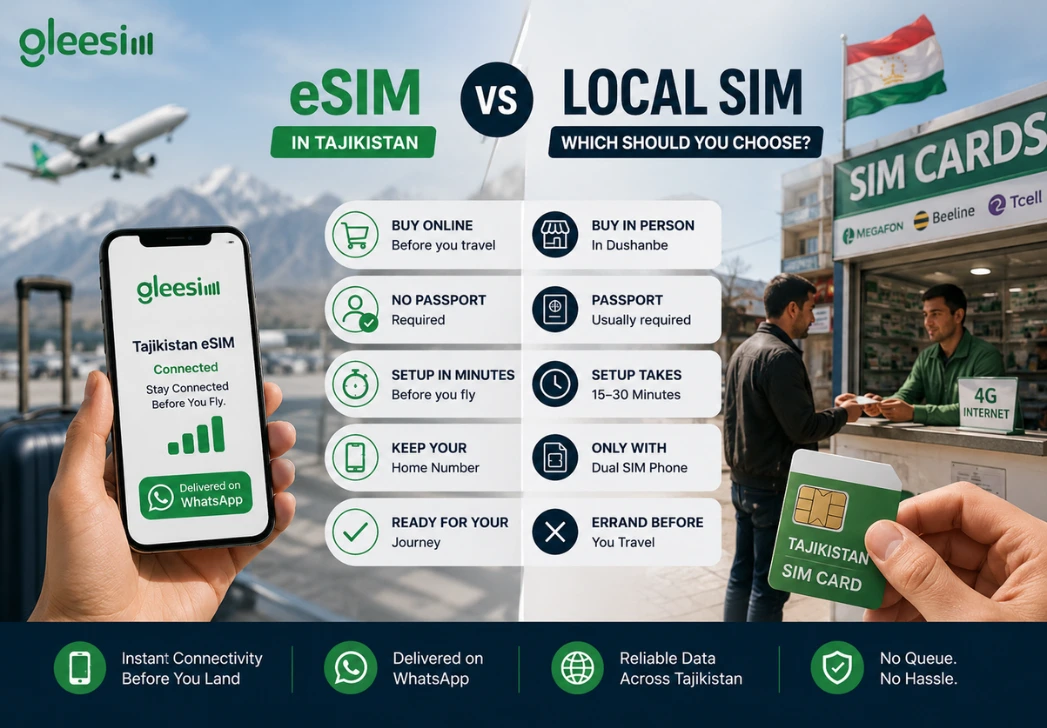
| eSIM | Local SIM Card | |
| Purchase | Online, before you travel | In person, in Dushanbe |
| Passport shown at purchase | No | Usually yes |
| Setup time | A few minutes, done in advance | Fifteen to thirty minutes on arrival |
| Works before you leave Dushanbe for remote areas | Yes, already active | Yes, but requires the initial errand first |
| Keeps your home number active | Yes, alongside the eSIM | Only with a dual SIM phone |
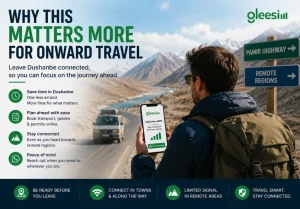
If your trip continues beyond Dushanbe toward the Pamir Highway or other remote regions, having your connectivity sorted before you leave the capital means one less errand competing with your limited time to arrange guides, permits, and transport. A local SIM bought on arrival still works fine for this, but it adds a step that an eSIM installed at home removes entirely.
For an extended stay involving genuine local admin, banking, or a longer term rental, a physical SIM tied to a Tajik number offers something an eSIM doesn’t replace.
Do I need to show my passport to activate an eSIM?
No, the eSIM purchase and installation process doesn’t involve the same in-person registration a physical local SIM requires.
Is a local SIM cheaper for a short trip?
Often the difference is small enough that the time saved with an eSIM outweighs it, particularly if your schedule in Dushanbe is tight before heading further out.
Can I keep my home number active alongside the eSIM?
Yes, most modern phones run both simultaneously.
Does an eSIM work the same way once I’m outside Dushanbe?
Coverage follows the same national network either way. Remote areas like the Pamir Highway have limited signal regardless of which option you choose.
See GleeSim’s Tajikistan eSIM page for current bundle pricing. When you are ready, get your bundle on offers.gleesim.com and skip the queue in Dushanbe entirely.