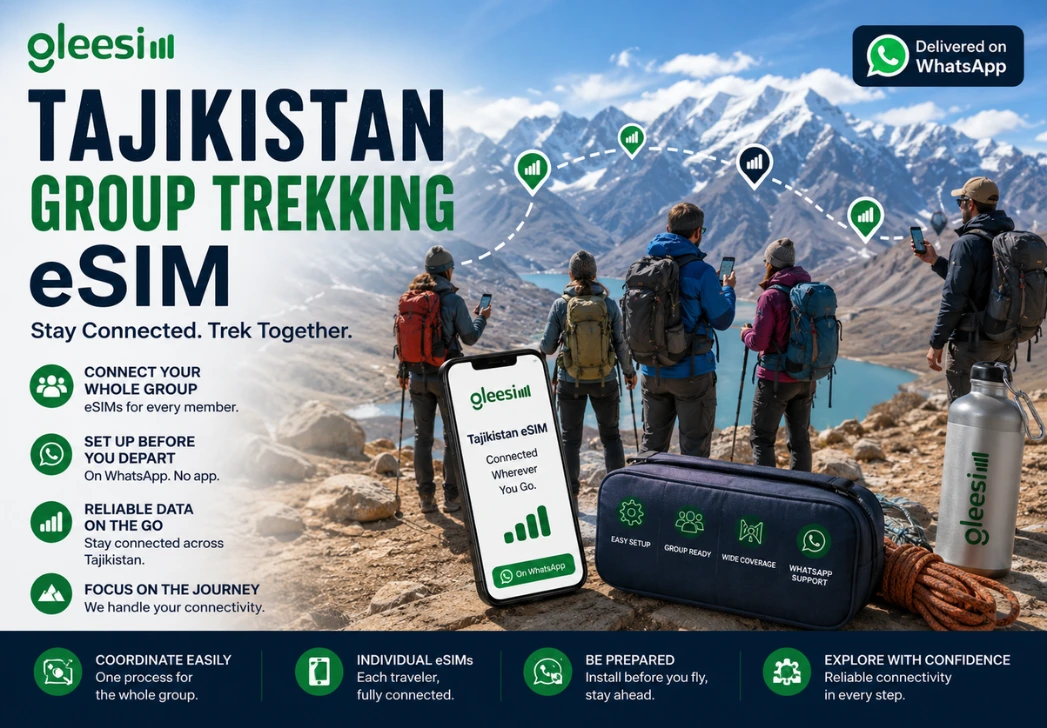
Are you organising a trekking group headed into Tajikistan and wondering how to get everyone connected without losing half a day to SIM card queues? Group trips into remote regions like the Pamir Highway already involve enough logistics without adding a connectivity scramble to the list.
This article will help you understand how to coordinate connectivity across a whole group before departure. After developing a complete understanding, you can make a better decision on how to prepare your trip.
A single traveller can sort out a SIM card on arrival without much cost to their schedule. A group of ten, fifteen, or more people doing the same thing at a local shop in Dushanbe turns into a genuine delay, particularly if the group is heading further out toward remote regions where the next opportunity to sort connectivity may not come for days.
One setup process sent to the whole group in advance. Rather than each traveller figuring this out independently, an organiser can share the same instructions to everyone before departure.
Everyone connected before the trip starts, not after arrival. This removes the single most common group delay: waiting at a shop while one member’s phone gives them trouble.
A shared understanding of where coverage actually exists. Groups heading into remote trekking terrain benefit from everyone knowing in advance where signal will and won’t be available, rather than each person discovering it separately.
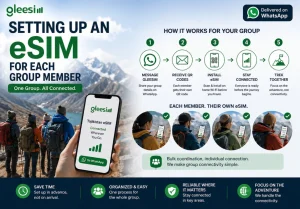
Bulk coordination, in this context, doesn’t mean one shared eSIM for the group. Each traveller needs their own, since eSIM profiles are tied to individual devices. What changes is that an organiser can coordinate the purchase and setup instructions across the whole group at once, rather than leaving each person to work it out alone.
Message GleeSim on WhatsApp with your group’s details, and each member can receive their own QR code to install before departure. Doing this five to seven days ahead gives everyone time to resolve any device issues while still at home, rather than discovering a problem in Dushanbe with the trip about to start.
Once the group is en route toward more remote terrain, coverage will genuinely thin out, particularly on the Pamir Highway’s higher passes. Having everyone’s eSIM already active before reaching those stretches means the group makes the most of whatever signal does exist in towns along the way, rather than losing time troubleshooting setup at each stop.
Can one eSIM cover an entire group, or does each person need their own?
Each traveller needs their own eSIM, since it installs on an individual device. An organiser can coordinate the process across the group without each person managing it independently.
How far in advance should a group set this up?
Five to seven days before departure is a reasonable window, giving time to resolve any compatibility issues while everyone is still at home.
Does this work for groups of different phone types?
Yes, eSIM works across modern iPhone, Samsung and Google Pixel devices, so a mixed group of phone types isn’t a problem.
What happens to connectivity once the group reaches the Pamir Highway?
Coverage becomes intermittent in that region for any provider. Having eSIMs already active means the group benefits from whatever signal does exist near towns along the route.
See GleeSim’s Tajikistan eSIM page for current bundle pricing. When you are ready, get your group’s bundles on offers.gleesim.com and set up the whole team before you fly.